
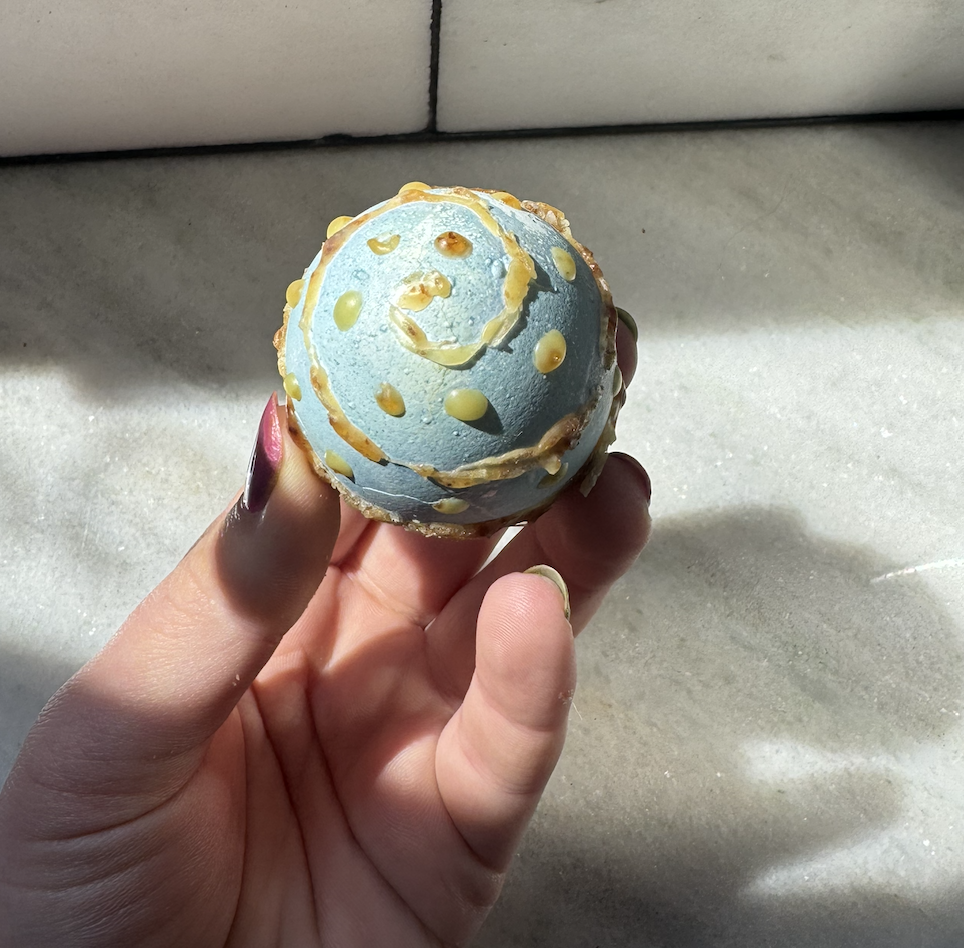
As these late winter months come to an end, hopefully the early spring weather will provide a refreshing shift to brighten the dreary and grey atmosphere. To embrace the upcoming spring season, especially with Easter approaching, setting time aside to dye Easter eggs might make this spring season even more delightful. While dying chicken eggs is a common Easter tradition, I’ve decided to research different egg dying techniques and ultimately landed on using wax to dye these chicken eggs.
For context, using wax to dye eggs has been a long-practiced tradition—commonly found in Eastern Europe. Countries like Ukraine call this process of decorating eggs pysanky and, based on the designs and beliefs about them, this style is thought to pre-date Christian times. In prehistoric Trypillian culture, people living in the region of Ukraine worshipped the sun and believed that it was the source of all life. Eggs would be decorated for these sun ceremonies as the sun warmed the earth and brought life to nature during the spring, similar to how eggs were a source of life during the springtime as well.
Of course, pysanky is an intricate and venerable tradition that requires practice and specific tools (that I don’t own). So my goal isn’t to perfectly replicate these complex designs on the first try, but rather, gain a greater appreciation for the tradition and the work that goes into this process.





TG Su • Apr 27, 2026 at 11:00 am
This sounds so fun!
Tess • Apr 25, 2026 at 4:27 pm
Looks Fun!!!!!!
clarisa marcano • Apr 6, 2026 at 1:45 pm
fun!!!
Addi H • Apr 1, 2026 at 6:43 pm
Super cool!!
Reeya Chundury • Apr 1, 2026 at 9:48 am
This is so cool! I can’t wait to try it. I especially enjoyed reading the backstory of pysanky and seeing your step by step gallery.
Meelah Haase • Apr 1, 2026 at 9:45 am
Very interesting information and wonderful design!