Angel decides it would be a good idea to drive everyone (Her car barely has a back seat). We made it to our destination, but it almost costed us our life. Jack and Olivia had to watch the road for Angel and if either of them took their eyes off the road, Angel would be close to crashing or making a terrible mistake on the road. However, we got to Via Farina, so that is all that matters.
Via Farina is the kind of restaurant that feels deliberate in every aspect. From the moment you walk in, there’s a clear sense that nothing is accidental—the lighting is low and warm without being dim, the space is open but still intimate, and the visible kitchen adds a level of transparency that makes the entire experience feel more connected. It leans upscale in both pricing and presentation, with most dishes sitting in the high teens to low twenties, and portions that are carefully controlled rather than oversized. It’s meant to be experienced slowly, not rushed through.
With many controversies, Angel and Jack finally came to an agreement of what to order.

Starting with the burrata, this dish sets the tone for what Via Farina does well. The cheese itself is incredibly soft at the center, almost spilling out as you cut into it, with a slightly firmer outer shell that gives it structure. Paired with a Sicilian tomato chutney, there’s an immediate contrast—not just in texture, but in flavor. The chutney brings a noticeable sweetness, but here it feels intentional rather than overpowering. It’s balanced by olive oil and basil, which add richness and freshness, creating a dish that feels layered without being complicated. It’s one of those plates where each component actually contributes something distinct, rather than just being there for presentation. Angel said she liked the appetizer, but she took all the toppings off and just ate the bread.
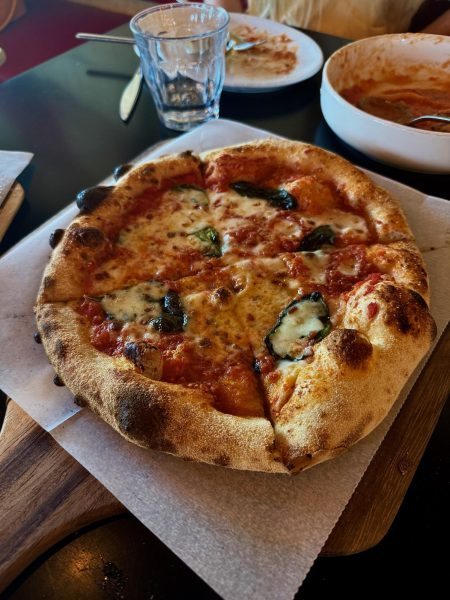
When it comes to the pizzas, the technical execution is clear right away. The crust is a standout—thin through the center with a slight chew, while the edges rise just enough to create that airy, lightly charred rim. It has structure without being heavy, and you can tell it’s been carefully made and fired. On a purely textural level, both the Margherita and the Salsiccia are strong.

The Salsiccia attempts to build more complexity, and in many ways, it succeeds. With sausage, fennel, arugula, semi-dried tomatoes, Calabrian chili flakes, and a hint of truffle salt, there’s much more happening in each bite. The sausage brings a savory depth, the fennel adds a subtle aromatic note, and the chili flakes introduce just enough heat to cut through some of the richness. The arugula adds a fresh, slightly bitter contrast, which helps. These elements work together to create a more layered experience and better balance the sauce’s sweetness than the Margherita does. Still, the underlying pomodoro remains a defining flavor, and for someone who prefers a more traditional, tangy tomato base, it can still feel slightly off. Angel did not like this dish at all and claimed, “it has too many toppings,” and even after she took all the toppings off she continued to not eat the pizza.

The bucatini is where Via Farina fully delivers on its potential. The pasta itself is clearly house-made, with a smooth surface and a firm, consistent bite that holds up throughout the dish. It’s cooked to that exact point where it’s tender but still has structure, allowing it to carry the sauce rather than get lost in it. The combination of pomodoro, basil, olive oil, and pecorino feels much more controlled here. The sweetness that stood out in the pizzas is toned down, allowing the saltiness of the pecorino and the richness of the olive oil to come forward. The basil adds a clean, fresh finish that ties everything together. It’s a dish that feels cohesive—nothing overpowers anything else, and the balance is noticeably stronger.
We collectively claimed the bucatini was the favorite. So, if you are looking for an inviting Italian spot with homemade pasta than Via Farina is perfect for a night out.