This statistic from Feeding America truly illustrates the severity and timeliness of hunger in the Cornhusker State. On top of the obvious health-related problems food insecurity causes, poor mental health and additional economic burdens occur as well. Children in food-insecure households can be more likely to have developmental issues as well: “Malnutrition in children may lead to reduced physical and mental capacity as well” (https://www.worldvision.ca/en/stories/food-insecurity-what-you-need-to-know)
On top of these concerns, due to COVID and other recent economic changes, many rural grocery stores in Nebraska have been forced to, or chosen to, close. These grocery stores, due to being in rural areas, end up serving families from further districts than in larger cities; in Omaha, it’s rare that you’re more than five minutes away from a Hyvee or Baker’s. In some rural Nebraska areas, some families may have to travel upwards of an hour to procure basic food, and this becomes harder when transportation isn’t available due to budgetary constraints. Many food-insecure households don’t have access to cars to take them to these increasingly distant grocery stores.

Food insecurity does not just occur in Omaha, either; across the country, “13.5 percent (18.0 million) of U.S. households were food insecure at some time during 2023”, according to the USDA. With 3.3 million children without guaranteed food on the dinner table after school, food insecurity is more than just a third-world issue; students all across the country are not receiving the proper nutrition that they need. (Food Security in the U.S. – Key Statistics & Graphics | Economic Research Service)
With such a prevailing issue looming over the country, action needs to be taken. However, solutions are easier said than done. From an economic standpoint, the rising cost of living—in conjunction with low wages and job insecurity—creates a substantial gap between the price of groceries and a family’s income. Similarly, from an attainability perspective, many low-income neighborhoods lack access to nutritious groceries, forcing many families to either resort to unhealthy alternatives or go without food altogether. (Understanding Food Insecurity in the US | United Way NCA)
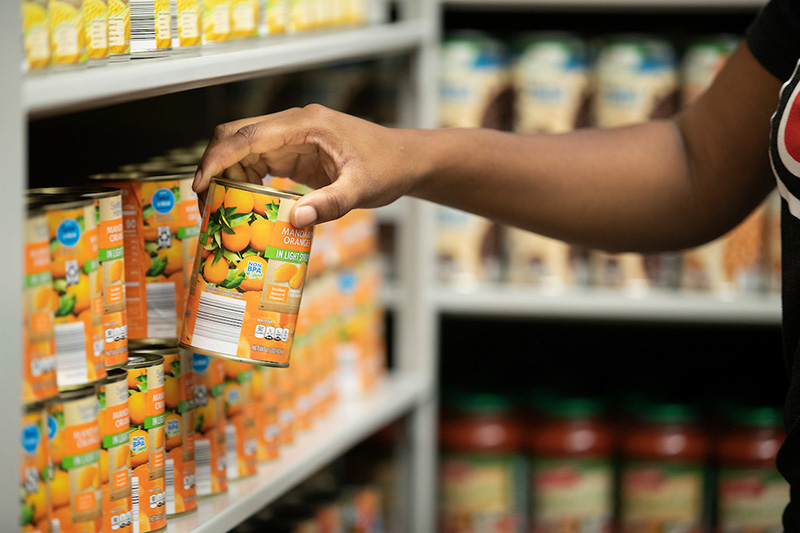
Consequently, this broader issue reveals itself on a smaller scale in our hometown: Omaha, Nebraska. Each year, the organization Completely Kids, which works to combat food insecurity throughout Omaha, shares its need for donations with our campus in an effort to collect as many canned goods as possible for local children and families facing hunger. After speaking with members of their staff and examining local data, we found that Completely KIDS served nearly 3,500 children and families across Omaha this past year, packing over 44,000 weekend food bags to ensure that students had meals when they were out. Additionally, their work extends to providing food assistance, addressing the challenges of hunger, academic support, mental health, and family stability that many Omaha families face. Cara Rizzo, the Chief Executive Officer of Completely KIDS, wrote last year: “I was encouraged by the hope, joy, and determination we see every day in the faces of those we serve”. She emphasized that while the hardships facing families are real, the togetherness of our communities is equally as powerful. In response to this call to action, the Brownell Talbot community comes together annually to gather as many canned goods as possible in support of this meaningful initiative. By donating canned goods and participating in this cause, each member of our school community can be of support for the Omaha families who need it most.