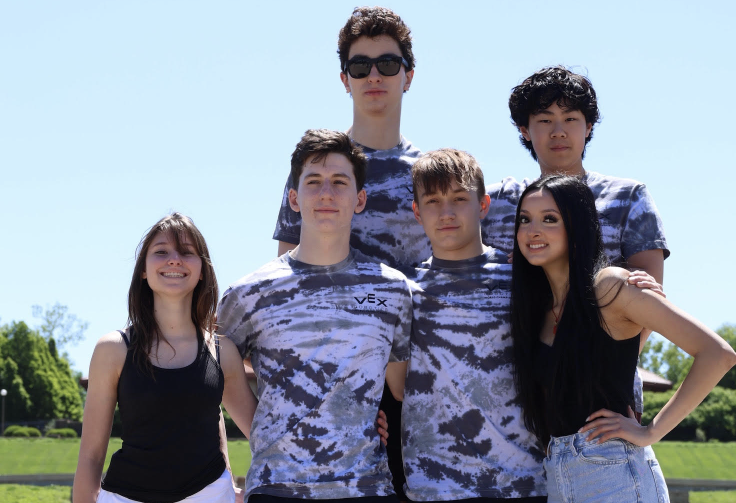
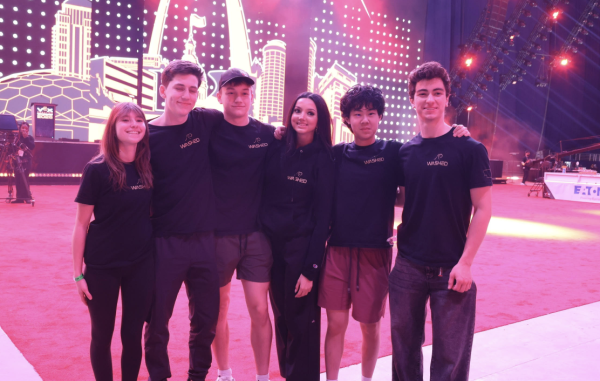
The VEX Robotics World Championship took place from Tuesday, April 22nd through Friday, April 25th in St. Louis. Team 1028A WASHED, made up of Cillian Rochling, Chris Holtzclaw, Eric Zhou, Wesley Wildes, Angel Bhandari, and Lara Blue, entered the competition after a season defined by consistency, discipline, and an extraordinary level of commitment. Over the course of the year, the team spent more than 7,000 hours designing, building, programming, and refining their robot, ultimately earning 29 awards leading up to the world stage.
The World Championship represents the highest level of VEX Robotics. Out of more than 10,000 teams competing globally throughout the season, only around 800 qualify to attend, representing over 40 countries. Every team present has already proven themselves through state championships, national titles, and top-tier judged awards. At this level, there are no easy matches. Success depends on precision, adaptability, and the ability to perform under pressure against the best teams in the world.
Teams are randomly assigned into one of ten divisions, each consisting of about 90 teams. 1028A competed in the Science Division. During qualifications, teams play 12 matches with randomly assigned alliance partners and opponents, meaning performance cannot rely on consistent teammates. It requires quick adjustment, strong communication, and the ability to maximize every match regardless of circumstances.
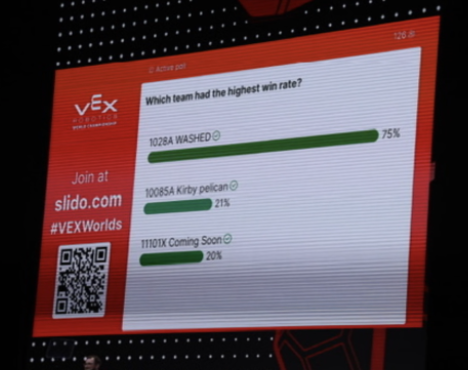
1028A performed at a level that set them apart from the entire field. They went undefeated in all qualification matches and maintained that record throughout the entire tournament. Out of every team competing at the World Championship, they were the only team to remain undefeated. They also achieved the highest win rate in the world at 92.4 percent, a statistic that was publicly recognized during the event. At a competition where even top teams expect losses, maintaining that level of consistency is extremely rare.
As the number one seed heading into alliance selection, 1028A had the opportunity to define their path through eliminations. They selected Team 10B Exothermic Burnout from Washington State, forming a highly strategic alliance. Together, they advanced through the elimination bracket without dropping a match, ultimately winning the Science Division.
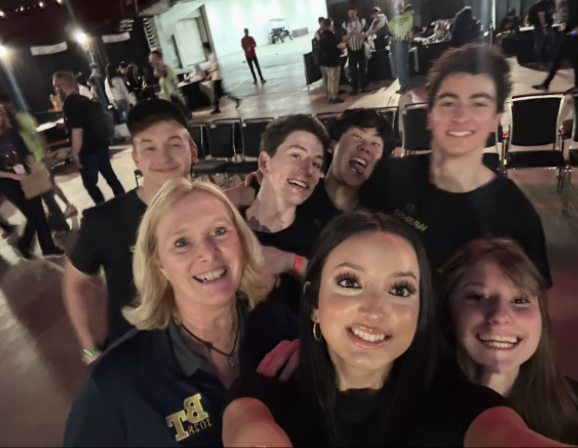
At the same time, their success extended beyond competition matches. Teams are evaluated for judged awards through a two-stage interview process. After an initial virtual interview, only select teams are invited to a second, in-person interview at Worlds. 1028A earned this second interview and demonstrated a deep understanding of their engineering process. Through their detailed notebook, design iterations, and clear explanation of problem solving, they showed how their robot evolved over time. This led to them receiving the Think Award, which recognizes one of the strongest and most complete engineering design processes at the competition.
Winning the Science Division advanced 1028A to the Dome, where division champions compete in a final elimination bracket to determine the World Champion. This is the highest-pressure stage of the event, where every match is closely contested and small mistakes can decide outcomes.
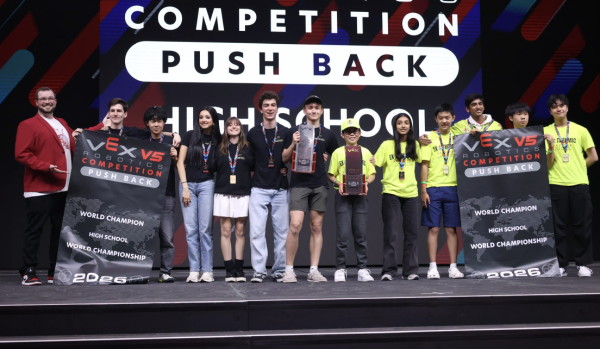
In the Dome, 1028A continued to perform with the same consistency that defined their entire season. They advanced through quarterfinals and semifinals to reach the finals, a best-of-three series that would determine the World Champion. In two close and highly competitive matches, they secured back-to-back wins to claim the VEX Robotics World Championship.
This achievement marked a historic moment. 1028A became the first team from Nebraska to win a VEX World Championship and the first team from Brownell Talbot to reach the Dome and win. Their season concluded with 29 awards, a Think Award at the World Championship, over 7,000 hours of work, an undefeated record against the best teams in the world, and the highest win rate globally.
We asked team member Chris Holtzclaw some questions about the experience.
Walk me through the moment you realized you’d won. What was going through your head?
At the end of the match you could see we had won the match. It was before they put the score up. I sat down to make sure I didn’t make a fool of myself, and I was extremely excited and nervous. There was a part in division finals where we got disqualified due to our teammate shooting balls out of the field, which was scary.
What was the single hardest problem your robot had to solve in competition?
The chain on the intake broke every match. There were two of them, but at any chance the intake could break and the whole robot would be useless. The chassis structure split in half and we had to make a replacement for it mid match.
Was there a point during the event where you thought you might not make it?
Division Finals 1 (DQ match)
How long did you spend designing this robot, and what changed most from your first prototype to what actually competed?
Over 1000 hours in robotics (same for other 3 guys), first robot was designed to fit under 12.5 inches which constrained the design. New addition didn’t care as much about this, we cared more about speed and efficiency.
What’s one design decision you made that looked wrong on paper but worked in practice?
Nothing looked wrong on paper, engineering-wise. There were some things that were more risky, like the robot type they decided to go with called a lever. They have a stick attached to a motor that pushes the balls in.
If you had to rebuild this from scratch with what you know now, what would you do differently?
I would have made it lighter, stronger, and have greater capacity.
What’s next — are you defending the title, or moving on to something else?
I’m probably going to learn how to use CAD and learn how to do some software. Next year I plan to mess around and learn other things in robotics. The idea of going home at 3:40 every day is appealing to me and having Saturdays available to chill.
What makes this performance stand out is not just the result, but the process behind it. It reflects months of disciplined work, constant iteration, and the ability to execute under pressure at the highest level. At a competition defined by parity and unpredictability, 1028A did not just succeed. They set the standard.